+86-18018129592 / +86-18021275688

manager@meiganggroup.com


Inquire Now
+86-18018129592 / +86-18021275688
manager@meiganggroup.com
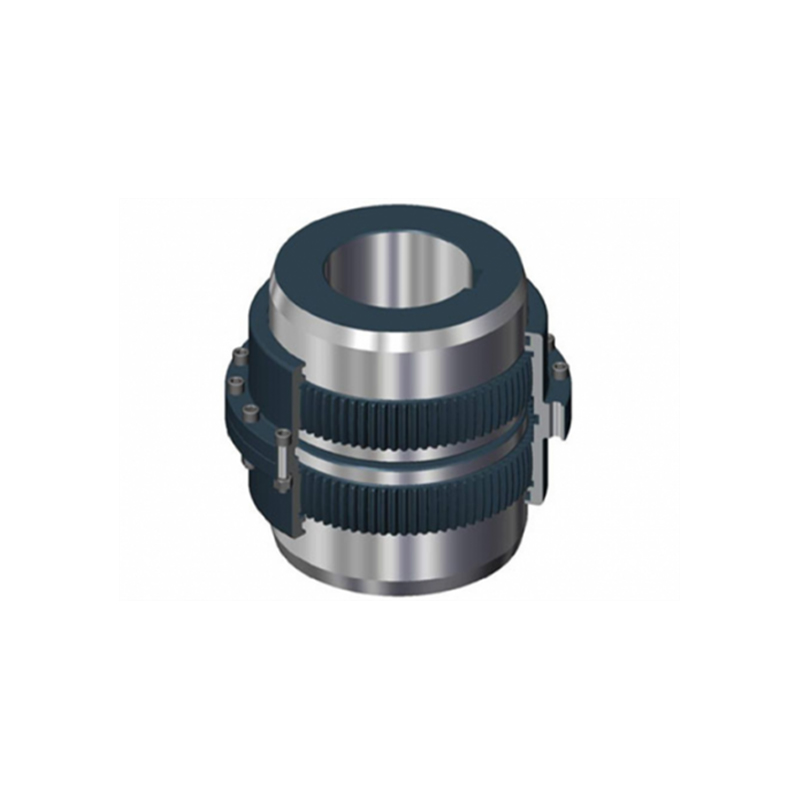
Gear coupling is widely used in industrial machinery to connect two shafts for transmitting torque while accommodating misalignment. They are known for their durability, high torque capacity, and ability to handle angular, parallel, and axial misalignment. In this article, we will explore gear couplings in detail, including their working principles, types, advantages, and common applications.
A gear coupling consists of two hubs with external gear teeth and a sleeve with internal gear teeth. The hubs are mounted on the connected shafts, and the sleeve meshes with the hubs to transmit torque. The gear teeth allow slight movements to compensate for misalignment while maintaining a strong connection.
Gear couplings come in different designs to suit various industrial needs. The most common types include:
This type consists of two hubs and a single sleeve. It provides flexibility in handling angular and parallel misalignment but has limited axial movement capacity.
Half gear couplings use one gear hub and one rigid hub, making them suitable for applications where only one side requires flexibility.
Used in long-span applications, this coupling includes an intermediate shaft to bridge large distances between connected machinery.
This design features a single sleeve covering both hubs, providing better protection against contaminants.
Gear couplings offer several benefits in industrial applications:
| Advantage | Description |
|---|---|
| High Torque Capacity | Gear couplings can transmit large amounts of torque efficiently. |
| Misalignment Compensation | They accommodate angular, parallel, and axial misalignment. |
| Durability | Made from high-strength materials, gear couplings have a long service life. |
| Compact Design | They provide high power transmission in a relatively small size. |
| Low Maintenance | Properly lubricated gear couplings require minimal maintenance. |
Despite their advantages, gear couplings have some limitations:
Gear couplings are used in various industries due to their reliability and torque transmission capabilities. Common applications include:
| Industry | Application |
|---|---|
| Steel Manufacturing | Rolling mills, conveyors |
| Power Generation | Turbines, generators |
| Mining | Crushers, heavy-duty machinery |
| Oil & Gas | Pumps, compressors |
| Marine | Propulsion systems |
Proper maintenance ensures the longevity and performance of gear couplings. Key maintenance practices include:
Gear couplings require periodic lubrication to minimize friction and wear. The lubrication interval depends on operating conditions.
Check for signs of wear, such as pitting, corrosion, or tooth damage. Replace worn components promptly.
Misalignment beyond the coupling's capacity can cause premature failure. Ensure proper shaft alignment during installation.
Excessive vibration may indicate coupling imbalance or misalignment. Regular monitoring helps detect issues early.
Choosing the right gear coupling involves considering several factors:
| Factor | Consideration |
|---|---|
| Torque Requirements | Select a coupling that can handle the maximum torque. |
| Speed | Ensure the coupling is rated for the operational RPM. |
| Misalignment | Choose a design that accommodates expected misalignment. |
| Environmental Conditions | Consider temperature, humidity, and exposure to chemicals. |
| Space Constraints | Ensure the coupling fits within available space. |
Gear couplings are often compared to other flexible couplings. Here's how they differ:
| Coupling Type | Advantages | Disadvantages |
|---|---|---|
| Gear Coupling | High torque, misalignment tolerance | Requires lubrication |
| Jaw Coupling | Simple, no lubrication needed | Lower torque capacity |
| Disc Coupling | High-speed capability, no backlash | Limited misalignment |
| Grid Coupling | Shock absorption | Lower torque density |
Even with proper maintenance, gear couplings can encounter issues. Here are some common problems and their solutions:
Cause: Lack of lubrication or contamination.
Solution: Improve lubrication practices and use seals to prevent contamination.
Cause: Misalignment or imbalance.
Solution: Realign shafts and balance rotating components.
Cause: Excessive friction due to misalignment or insufficient lubrication.
Solution: Check alignment and ensure proper lubrication.
Gear couplings are essential components in many industrial applications, offering high torque transmission and misalignment accommodation. Understanding their types, advantages, and maintenance requirements helps in selecting the right coupling for your needs. By following proper installation and maintenance practices, gear couplings can provide reliable service for years.
Whether you're working in steel manufacturing, power generation, or heavy machinery, gear couplings play a crucial role in ensuring efficient power transmission. Always consider operational requirements and environmental conditions when choosing a coupling to maximize performance and longevity.

We have a strong R&D team, and we can develop and produce products according to the drawings or...

We have two of our own casting foundries and one CNC machining factory. So we can offer the best price...

We have our own testing lab and the advanced and complete inspection equipment, which can...


+86-18018129592
+86-18021275688

manager@meiganggroup.com
sales_001@meiganggroup.com
sales_002@meiganggroup.com
© 2024 SUZHOU MEIGANG ENG TECH LIMITED All rights reserved. China Integrated Metallurgical Equipment Manufacturer

 English
 русский